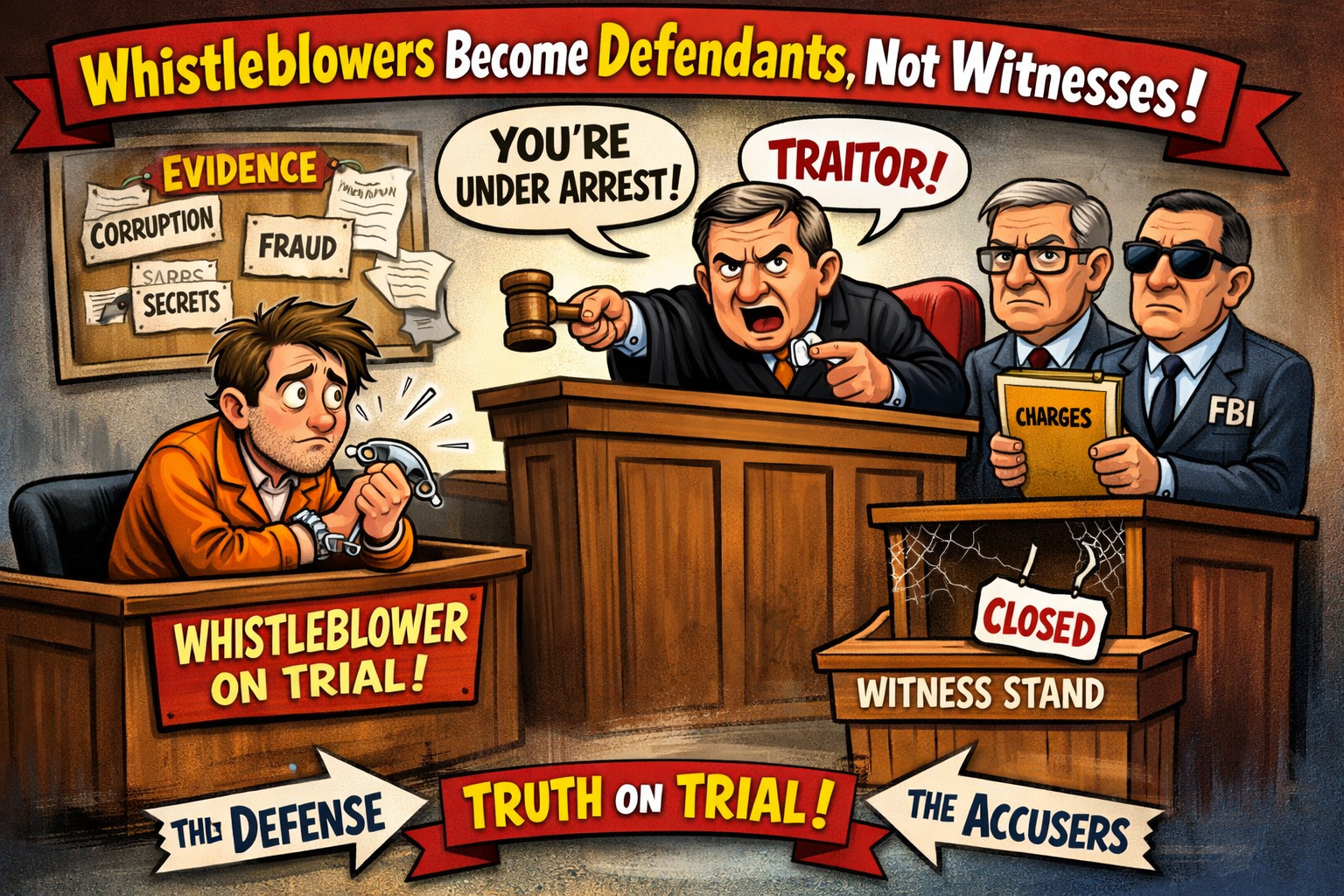
Private Criminal Prosecutions in Spain
Costa Natura, a Systemic Microcosm

This analytical note exposes how a whistleblower’s good-faith reporting of financial and governance irregularities affecting an iconic naturist tourist resort resulted not in institutional investigation, but in private criminal defamation proceedings against the reporting individual. The case illuminates systemic issues within Spain’s class-based ecosystem of persons purporting to possess “knowledge of law”:
structural instability of Spain’s mixed (private & public) criminal prosecution model,
failure of Article 11.2 Organic Law of Judiciary (LOPJ) to prevent an abusive process,
recurring downward-delegation within public prosecutors’ offices,
Analysis rests on documentary evidence, including 1979 promotion of a commercial development for naturist tourism. Reclassification (1980-1985) by notarios públicos as(-if) a “community of homeowners” lacks legal basis.
Legal Fiction
1979 archives describe Costa Natura as “conjunto residencial-turístico” or “apartamentos turísticos” ?commercial complex. Notarised-registrations (1980-1985) of 4 x separate “comunidades de propietarias” (joined into 1 x “comunidade de propietario” approx 1985) contravened 1980s’ laws. Local loopholes opened, inviting new possibilities for organised white-collar crimes performed by, orchestrated by and for-benefit-of lawyers in-and-out autistic spectrum.
Faux-official permission and private encouragements to “invest for retirement” through purchase of bricks and mortar (laid in an orderly manner) upon a terrestrial surface not submerged by water (where residency is prohibited and extortion is permitted) enables multinational-lawyers to scam clients. Similar circumstances enable many anonymous state entities (e.g. PoorTuGal, sPain etc.) to evade post-WW2 welfare to seekers of asylum. Furthermore, enables some longterm illegal residents to evade personal income taxes. No authority ever approved a Horizontal Property (LPH) constitution for Costa Natura commercial development, nor transformation of the tourist complex into individually owned “homes”.
Costa Natura:
Never legally authorised to operate as a “comunidad de propietarios / community of homeowners”. Notarial inscriptions (1980–1985) purport to transform a commercial tourist resort into a horizontal property regime with a “president”, “owners’ meetings” and “community statutes”. Notarial inscriptions are not validated by administrative resolutions, contradict land-use classifications, and remain anomalous legal artefacts rather than lawful instruments.
Proven consequences of foundational incoherence:
45 years of recurring governance conflicts, financial opacity, absence of institutional accountability, and structural vulnerability to private power networks — which, lacking administrative oversight, have relied upon Spain’s private criminal defamation laws to suppress scrutiny.
-
The whistleblower identified documented inconsistencies in accounts, missing financial information, and governance irregularities involving individuals in positions of informal authority within Costa Natura.
-
Before any judicial action occurred:
a mass email campaign announced that the whistleblower “had committed crimes”;
P. Bryceson’s privately engaged lawyer (J. C. del Puerto) circulated multiple unsigned PDFs;
recipients were instructed to forward all communications from the whistleblower for use in “legal action”;
several judicial notices were delayed, intercepted, opened without consent, altered, delayed, and delayed.
Possible SLAPP indicators: pre-declared guilt; coordination; attempts to socially isolate the reporting individual.
-
Rather than investigating the evidence presented, individuals linked to the management network initiated private criminal defamation proceedings (injurias y calumnias), leveraging Spain’s unusual allowance for private actors to prosecute without public-prosecutorial support.
The Ministerio Fiscal never accused; the private complainants acted alone.
-
Spain remains amongst few European states in which private individuals may:
initiate criminal proceedings,
sustain them without prosecutorial support,
drag defendants through years of process without state supervision.
This dual-track model enables public prosecutors to:
decline difficult matters,
delegate downstream to local offices,
allow private litigants to weaponise criminal law.
-
2021–2026:
Madrid (Spain): many departments of Fiscal del Ministerio Público read materials then redirect to Malaga, bypassing Andalusia’s Attorney General (Granada). Fiscal del Ministerio Público in Malaga consistently defers to a sub-office in Marbella. Marbella sub-office displays remarkable humour and intelligence, despite that Fiscal del Ministerio Público maintains no presence in any of Estepona’s 6 x courts.
Granada (Andalusia): read materials; redirect to Málaga.
Málaga (Andalusia): redirect to Marbella (without reading).
No office asked to be kept informed of the outcomes of the office to which it delegated.
-
Submitted evidence includes:
financial inconsistencies,
missing funds and falsification of audited accounts,
questionable legal status of the entity,
interception and manipulation of judicial notifications,
falsification of documents.
No authority appears yet to have conducted any investigative actions.
-
Spain’s “Organic Law of the Judiciary” requires courts to reject petitions or actions that constitute abuse of right or procedural fraud. However:
private lawyers deny its applicability;
criminal lawyers frequently appear unaware of its existence;
judges rarely invoke it sua sponte.
J. Chacón and I. Ortega illustrate precisely the category of abusive proceedings Article 11.2 LOPJ was intended to prevent.
Why private complainant pursues criminal punishment without public scrutiny?
How public prosecutors pass responsibility downwards until administrative death…
When criminal procedure becomes a retaliatory instrument against free speech.
Costa Natura’s archival record describes a tourist resort — ephemeral, sunlit, designed for leisure and regulated as such. What later emerged — a community of homeowners, with presidents, statutes, “owners’ meetings”, and a cascading hierarchy of informal legal actors — resembles more a work of notarial magical realism than administrative law. In that imaginative space, where a commercial resort transmutes into a “community” without any legal authorisation:
financial opacity flourishes,
institutional oversight disappears,
free enquirers become defendants of private prosecution.
Personal experience suggests an ecosystem in which:
public prosecutors avoid responsibility through downward delegation,
private lawyers survive+/-flourish by issuance of false criminal accusations,
judicial employees fail to apply their own protective mechanisms.