‘Go Back to Marbella’: how Jurisdictional Language Ends Accountability
Since 2021, I have been the target of private criminal proceedings brought without the support of Spain’s public prosecution service and characterised by countless procedural irregularities. Those proceedings arose after I raised concerns about long-standing financial and governance irregularities at Costa Natura, a large coastal development in Málaga Province.
My communications with the Fiscalía have not asked it to manage my defence, intervene in court procedure, or reopen matters already judicialised. Instead, they have consistently focused on two substantive issues:
A structural legal anomaly
Costa Natura was originally approved as a commercial tourist resort, yet was subsequently registered and operated as if it were a residential community of homeowners. Over more than four decades, this dual and contradictory legal character has been applied selectively, creating a regulatory void that enables financial opacity and abuse.Instrumental use of criminal proceedings to silence whistleblowing
The private criminal case against me functions not as a response to criminal conduct, but as a mechanism of retaliation and intimidation, aimed at suppressing disclosure of organised economic wrongdoing. The evidence submitted in my defence does not merely rebut the accusations against me; it points to serious misconduct by my accusers themselves.
“I therefore respectfully reiterate the following requests to the public prosecution service: recognise the recurring and coordinated nature of the conduct described; assess it under Spain’s legal definitions of organised crime and economic fraud; and address not merely individual actors currently involved, but the structural mechanism (i.e. notarial registration of an approved tourist resort as if it was a community of homeowners) that has allowed repeated financial abuse of countless persons over several decades.”

-
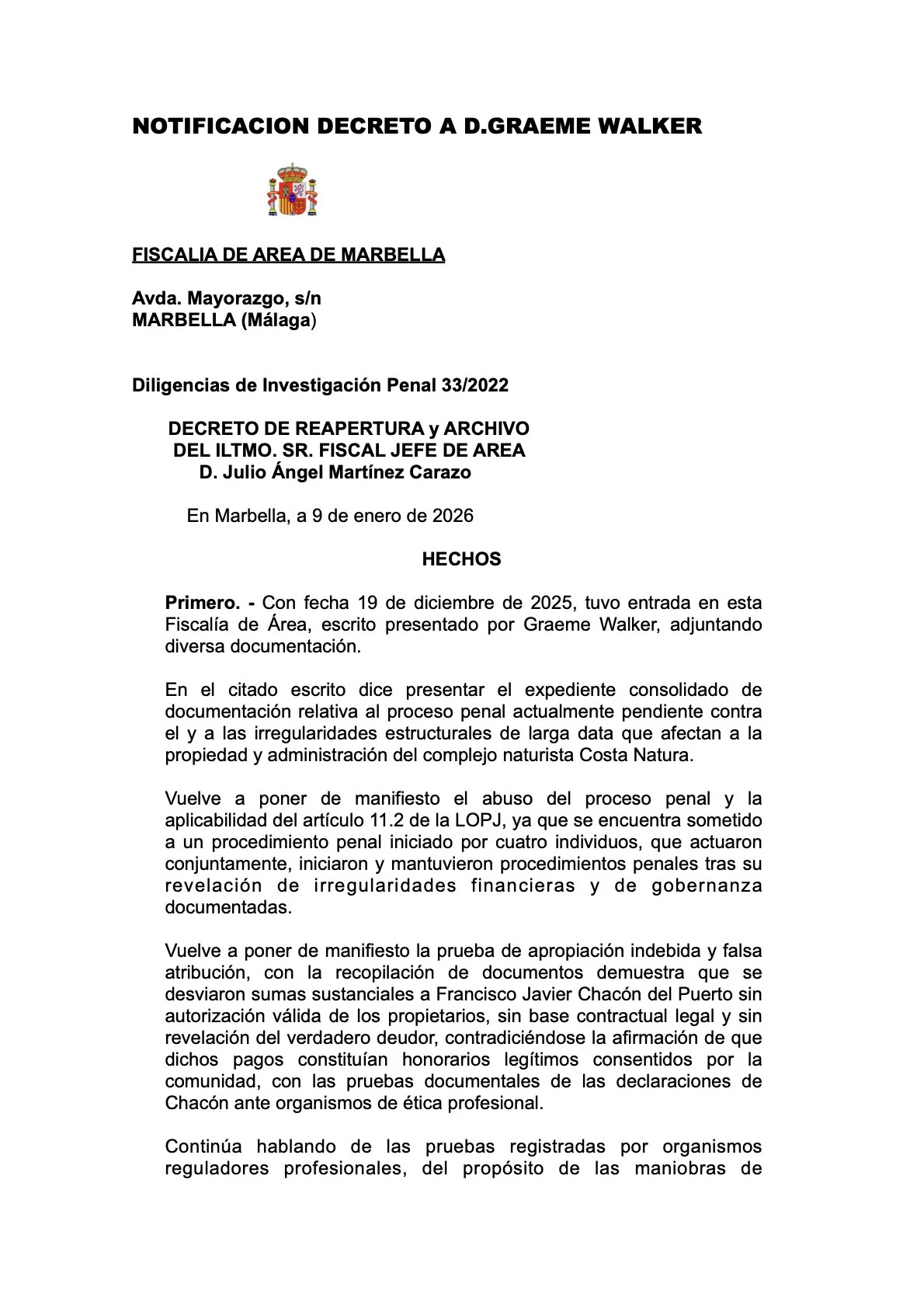
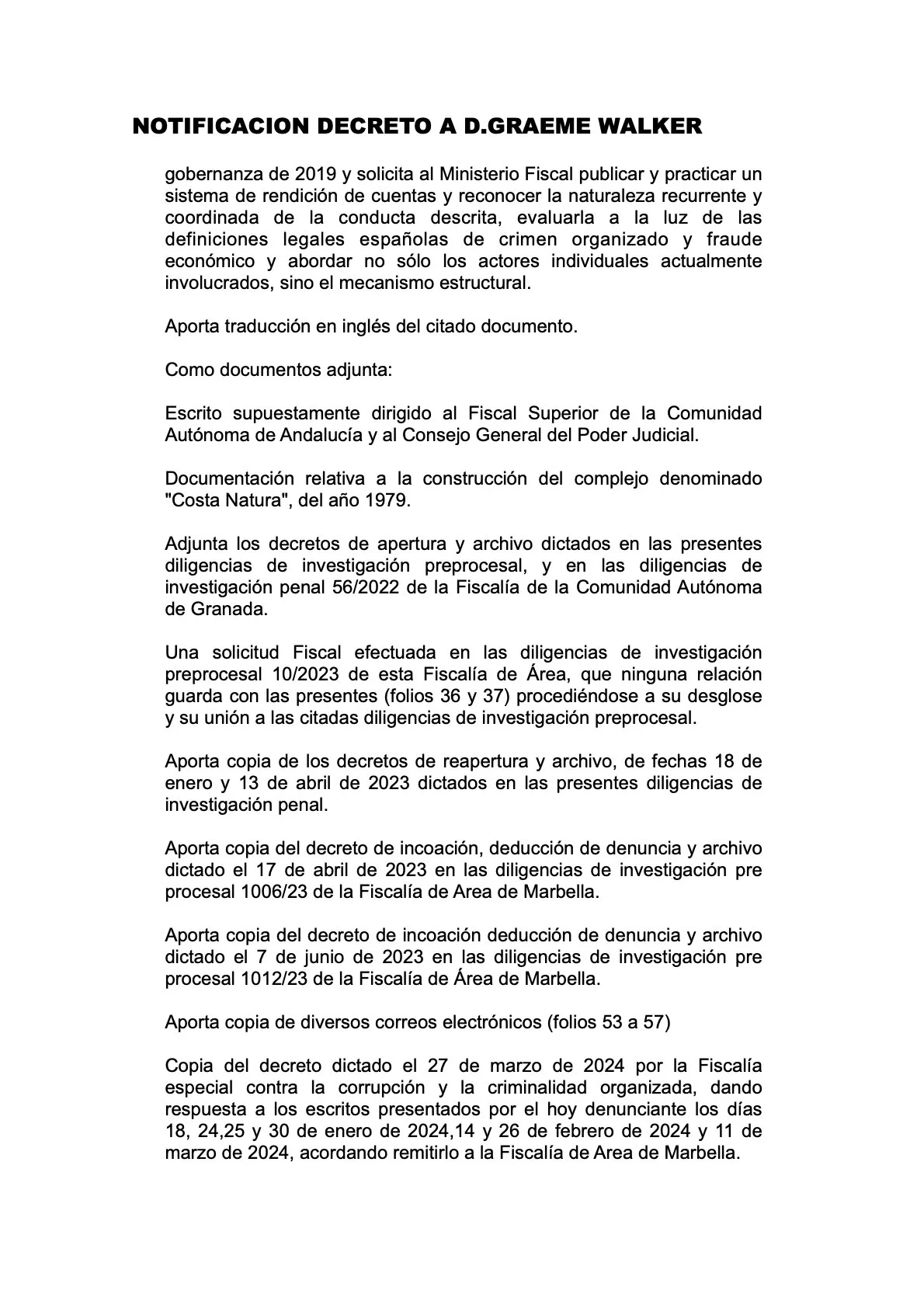
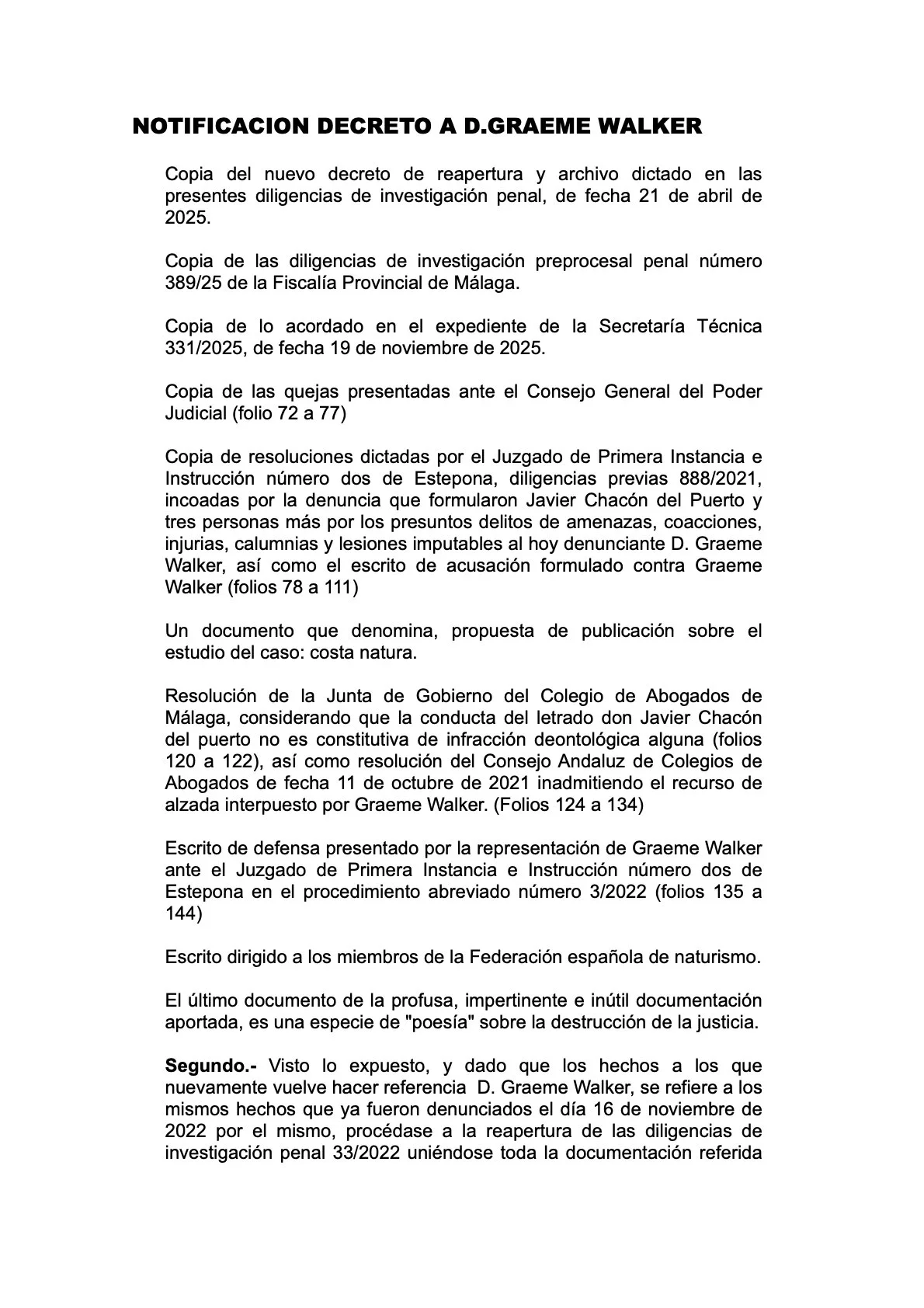
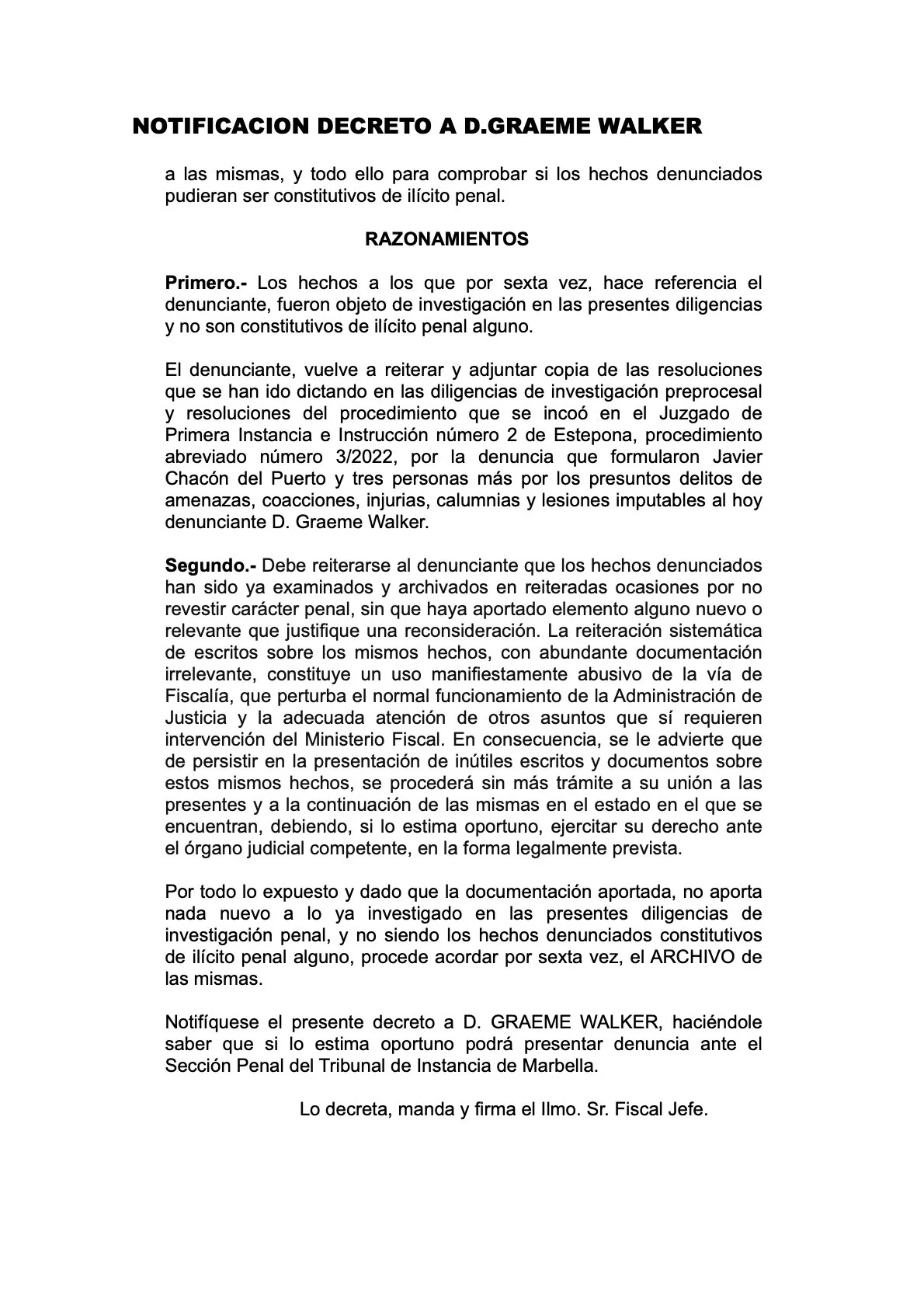
On 30 January 2026, I received by email a letter from Fiscalía de Área de Marbella. Letter is dated 9 January 2026 (no earlier notification was received by snailmail or other means). Email reached me exactly 21 days after date specified on letter. This blog requests factual examination of an institution’s deflection of responsibility when substantive issues are raised. The letter is linked as a PDF, verbatim and unaltered, so that readers may examine it directly.
-
Matters addressed to Spain’s Public Prosecution Service concern a tourist development ~2 kilometres west of Estepona, in Estepona district.
Issues relate to:
persistent ambiguity (~>45 years) of legal and regulatory status of real estate,
approval from Madrid (~1979) of a commercial tourist resort,
notarial registrations (~1980-1985) and rent-extractions as if commercial tourist resort was simultaneously a residential community of homeowners,
consequences of contradictions over several decades.
-
Letter from Marbella Fiscalía:
is dated 9 January 2026;
was first communicated to me by email on 30 January 2026;
reopens an investigative file solely in order to archive it again;
characterises documentation as repetitive and irrelevant;
concludes by offering permission to contact an unspecified ‘competent judicial body’, adding a reference to Criminal Section of Court of First Instance in Marbella.
No explanation is provided for:
21-day delay between typing and notification, lack of signature,
relevance of Marbella courts.
These are not stylistic observations. They are matters of record.
-
Procedurally, letter from Sr. Fiscal Jefe. performs a limited set of actions:
acknowledges receipt of submission;
records that material has been examined;
archives the matter once more;
withdraws further debate.
It does not identify any mechanism for review or reconsideration. It does not specify any legal remedy, deadline, or procedural pathway. It does not state that the matters raised are incorrect, only that they will not be pursued.
-
One factual inconsistency in public prosecutor’s letter appears in its closing paragraph: after referring abstractly to a “competent judicial body,” the letter names Criminal Section of Court of First Instance in Marbella. Such reference is difficult to reconcile with factual and territorial context. Costa Natura is located approx. 2km west of Estepona. Any alleged conduct relevant to issues described would fall, if anywhere, within jurisdiction of Estepona’s ~6 Courts.
I do not accuse anyone, nor am I accused by anyone, in relation to Marbella district. Sr. Fiscal Jefe’s reference to Marbella therefore appears formulaic rather than case-specific. It deflects responsibility to a court without territorial competence.
-
Fiscalía’s letter does not offer an appeal against its decision. No mechanism is identified for Spain’s criminal courts to supervise prosecutorial archiving decisions. Nor does the letter invite a complaint against the Fiscalía itself. No such procedure is described, and no allegation of prosecutorial misconduct is suggested.
Yet, any individual appears free (conditional only upon owning pockets filled with gold) to file a “private criminal complaint” directly with any investigating court; a possibility ripe to be exploited for private gain. What is offered, therefore, is not a remedy, but a general procedural possibility neither specified nor connected to facts.
-
21-day delay between date and notification by email; reference to a court lacking territorial competence; no identified legal remedy; no engagement with substantive issues raised. Mundane accountability ends not via reasoned rejection, but via procedural closure and indeterminate deflection.
Structural issues appear unexamined (private criminal proceedings as an only visible context).
-
No satire required: Irony arises from epigraphy:
A letter dated 9 January is emailed on 30 January.
A matter arising in Estepona is wrongly directed to jurisdiction of Marbella.
A request for recognition of structural conditions is reframed as procedural persistence.
Responsibility is neither assumed nor escalated; it is displaced.

“Costa Natura has a unique relevance for being: the first naturist development in Spain; a European reference of tourist architecture; a space of cultural and historical relevance for international naturism. At the same time, it is known among international naturist communities as a place where, for decades, numerous people have been victims of continuous fraud, legal opacity and artificial conflicts. The damage is not merely individual: it is reputational, structural and cumulative, affecting Spain as a tourist and legal destination. With absolute institutional respect, I request: reopening and unification of investigation proceedings from a structural perspective, not limited to individual criminal proceedings; historical-legal analysis of the registration and urban situation of Costa Natura; consideration of corrective measures of public interest, under the principle of legality and legal certainty. I would like to suggest - as a way of historic closing the problem, simply an idea - the consideration of: public recognition of the original nature of the complex as a tourist establishment; reversion to a model of single ownership, compatible with the initial urban legality; creation of a listed commercial company, whose majority capital is in perpetuity property of a non-profit foundation dedicated to the cultural practice of naturism; establishment of equitable compensation mechanisms to current rights-holders for forced expropriation. This proposal definitively resolves a historical focus of litigation and economic crime.”